Privacy-Preserving AI
Designing machine learning systems that run inference locally, keep sensitive data on the device, and explain their risk scores.
Researcher · Software Engineer · Educator
I build and study secure, privacy-aware AI systems, drawing on cybersecurity, digital forensics, data infrastructure, and human-centered computing. As an educator, researcher, and data analyst, I focus on translating complex technical ideas into practical systems, applied research, and real-world learning experiences.

John Jay College featured my journey as a computer scientist, AI and cybersecurity researcher, educator, and CUNY data professional working to protect people in the age of AI.
Read the FeatureI am originally from Bangladesh and now based in New York City. My work brings together cybersecurity, digital forensics, artificial intelligence, and applied data systems. Across these areas, I am most interested in building technology that solves real problems without losing sight of privacy, security, and the people using it.
I currently serve as a full-time Substitute Lecturer in Computer Science at John Jay College of Criminal Justice (CUNY) and as an Adjunct Assistant Professor at St. John's University, where I teach a graduate course in cyber forensics and malware analysis. I also work as a Data Analyst at the CUNY Central Office. In the classroom, I focus on helping students understand how systems work; at CUNY, I build reliable reconciliation and validation workflows for complex, multi-campus data.
My research focuses on the ways AI and security systems can fail under adversarial, linguistic, and privacy-related constraints, and how those systems can be made more robust and trustworthy. My master's thesis examined the adversarial robustness of perceptual hashing systems. I am also continuing research in machine learning and low-resource language infrastructure, supported by computational allocations from NSF ACCESS, on which I serve as Principal Investigator.
Outside of work, I am an avid traveler and photographer. Travel has given me a broader perspective on people, environments, and the different ways systems are experienced in practice. That perspective continues to influence how I think about technology, research, and the kinds of problems worth solving.
I teach applied computer science with a focus on clear algorithmic thinking and secure systems. Mentoring students to build robust software is a cornerstone of my professional practice.
Fall 2026 Object-Oriented Programming · Database & Data Mining · Computer Algorithms
Fall 2026 · Graduate Cyber Forensics & Malware Analysis
Long-form guides for general readers and students alike.
A jargon-free guide to online safety, scams, and identity protection for everyday readers — available now on Amazon Kindle.
Learn More
A print-ready, 17-chapter guide to version control for first-semester C++ students.
Read the Ebook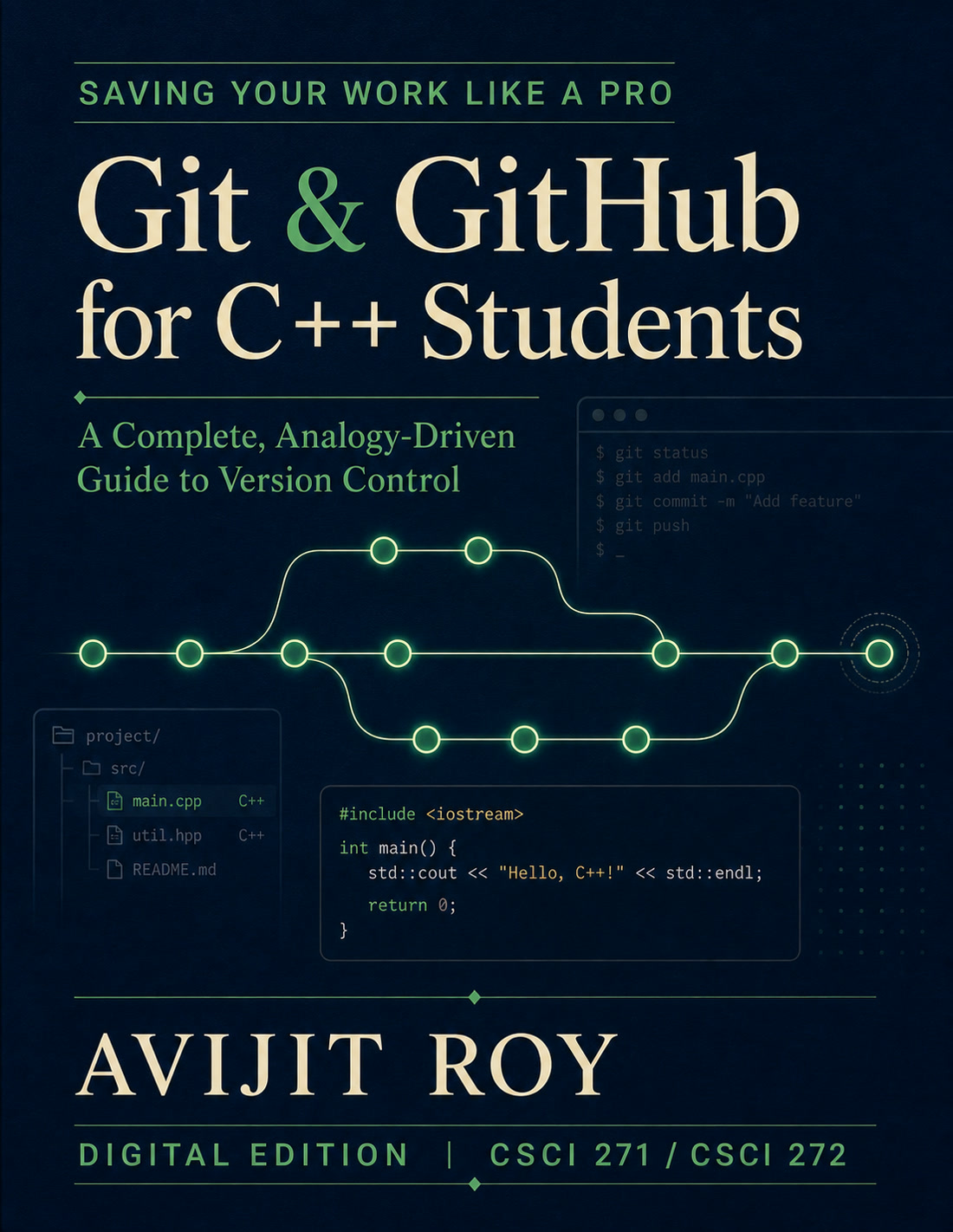
Areas where my teaching, research, and engineering overlap.
Designing machine learning systems that run inference locally, keep sensitive data on the device, and explain their risk scores.
Building phishing detection, hash-based evidence verification, and secure software for investigative work.
Building .NET backends, SQL data warehouses, and automated CI/CD pipelines for institutional data systems.
Mentoring students in disciplined programming, algorithmic thinking, and responsible software design.
Research in cybersecurity, applied machine learning, and public-interest intelligence systems.
A deep-reinforcement-learning inverter control framework with an embedded intrusion detection system, validated on WLTP and UDDS driving cycles and published in Wiley's Applied Research.
View Published PaperIntegrating blockchain validation, federated learning, and zero-trust models to enable secure distributed data collaboration while minimizing centralized exposure.
View Published PaperConverting malware binaries into grayscale images and comparing six CNN architectures on a rebalanced dataset of malware families, with ResNet50 reaching approximately 0.95 accuracy.
View Published PaperA hybrid propaganda detection system combining local BERT-based sentence classification, selective LLM explainability, and cost-aware filtering for practical media analysis workflows.
View PresentationA staged phishing detection architecture that runs ONNX transformer models inside the email client, so message content never leaves the device.
View Patent DetailsSoftware systems I have built, migrated, and deployed.
Capstone Legacy System Modernization. Modernized a nonfunctional multi-agency intelligence platform by migrating its backend to .NET 9, replacing its paid mapping service with a real-time mapping layer, adding the security layer it had never had, and deploying the recovered system to Microsoft Azure.
View DetailsStrict Session Enforcement. An asynchronous authentication system relying on deterministic token invalidation and GeoIP logging to prevent concurrent testing access.
View SourceNews Article Extraction Pipeline. A Python pipeline that separates article text from page markup and produces clean datasets for sentiment and linguistic analysis, used in the Propasafe-Hybrid research.
View DetailsZero-Trust Verifier. A browser-based JavaScript tool that computes MD5, SHA-1, and SHA-256 hashes locally, so files are never uploaded to a server.
Test ToolContact
I enjoy connecting with technologists, educators, and storytellers. Whether discussing architectural design patterns or sharing global travel experiences, I'd be glad to hear from you.